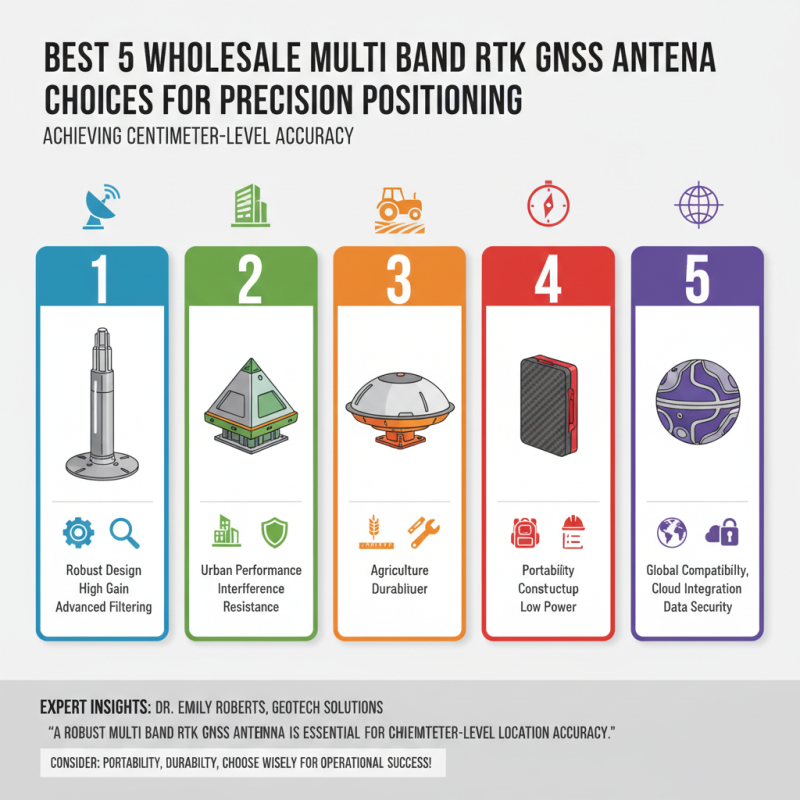
In today’s fast-changing world of positioning tech, having a reliable Multi Band Rtk Gnss Antennais more important than ever. Experts like Dr. Emily Roberts from GeoTech Solutions often say, "A solid Multi Band Rtk Gnss Antenna is key to getting that centimeter-level accuracy you need." Whether you're into farming, construction, or surveying, picking the right antenna can really make or break your project’s success.
Honestly, with so many options out there, it can feel pretty overwhelming. Not all multi band Rtk Antennas perform the same or are equally reliable. Some work great in busy city environments, while others shine in open fields. That variety can make it confusing trying to figure out which one is best for your specific environment. It’s also worth considering things like signal interference and environmental factors that could mess with performance.
This guide is here to give you a rundown of the top five options currently on the market. While it highlights some of the best models out there, it’s good to remember—no antenna is perfect. Each one has its own quirks and limitations. When choosing, think about things like how portable it is, how rugged and durable it needs to be, and which brand you trust. Taking a bit of time to consider these factors will help you find the right fit and get the most out of your positioning setup.
Overview of Multi Band RTK GNSS Antennas for Precision Positioning
Multi Band RTK GNSS antennas play a significant role in precision positioning for various applications. These antennas can process signals from multiple satellite systems, enhancing accuracy and reliability. Users can experience better performance when using antennas that support diverse frequency bands.
When selecting a multi band RTK GNSS antenna, consider the environment. Urban areas might create interference due to tall buildings. On the other hand, rural locations can provide clearer signals. It’s crucial to assess surroundings before making a choice.
Tips: Always check the antenna's gain characteristics. Higher gain can improve range, but it may lead to noise interference. Additionally, ensure proper installation. Correct mounting can resolve potential issues with signal reception.
Keep in mind that a key aspect of multi band systems is versatility. Some setups may cater specifically to Quad Band Gnss configurations. However, not every application requires multi-band capabilities. Sometimes, simpler systems can suffice. Balance the need for precision with the complexity of the setup.
Best 5 Wholesale Multi Band RTK GNSS Antenna Choices for Precision Positioning
Importance of Choosing the Right Wholesale RTK GNSS Antenna
Choosing the right RTK GNSS antenna is crucial for achieving precise positioning. Studies show that up to 70% of positioning errors can be attributed to poor quality antennas. A reliable wholesale multi-band RTK GNSS antenna can significantly reduce these errors. Dual Band Gnss antennas have become increasingly popular due to their ability to receive signals from both L1 and L2 frequencies. This capability enhances accuracy and reliability in various conditions.
High-quality antennas often feature advanced design elements like low noise amplifiers and robust materials. These elements ensure that the antenna can function effectively in challenging environments. Many users report an improvement in signal integrity and consistency with dual band models. However, not all products labeled as multi-band offer the same performance. It's important to review technical specifications and user feedback.
Furthermore, the antenna’s placement can contribute significantly to its performance. Even the best antennas can underperform if not positioned correctly. Some surveys indicate that over 40% of GNSS users face challenges related to antenna positioning. This highlights the need for careful assessment during installation. Ensuring you have the right equipment is just as important as understanding its settings and environment.
Criteria for Evaluating Multi Band RTK GNSS Antennas
When evaluating Multi Band RTK GNSS antennas, several criteria should guide your choice. Start with sensitivity and accuracy. A high-sensitivity antenna ensures reliable signals, even in challenging environments. Look for specifications that indicate precision, especially in dual-band GNSS modules, which enhance performance in various conditions.
Frequency range is another crucial aspect. Opt for antennas that cover multiple frequencies. This versatility is vital for maintaining signal integrity across different GNSS systems. Dual Band Gnss Modules can improve positioning accuracy significantly.
Tip: Always check user reviews and expert opinions. Real-life experiences offer insights that specifications alone may not reveal.
Lastly, durability can’t be overlooked. The antenna will face weather challenges over time. Ensure it is built with robust materials. A well-constructed antenna can withstand harsh environments, extending its lifespan.
Tip: Conduct field tests. Evaluate how the antenna performs in real-world scenarios. This hands-on experience highlights strengths and weaknesses you might miss otherwise.
Top 5 Wholesale Multi Band RTK GNSS Antenna Recommendations
When it comes to precision positioning, choosing the right multi-band RTK GNSS antenna is crucial. These antennas are designed to provide accurate data for various applications, including surveying and agriculture. The diversity of options available ensures that every user can find something suited to their needs.
One important aspect to consider is the antenna's frequency range. Multi-band antennas typically support various frequencies, allowing for better satellite coverage. This capability enhances accuracy, especially in difficult environments, such as urban areas. Users should evaluate the terrain where the antenna will be used. Complex landscapes can affect signal reception, which calls for a more resilient option.
Tips: Look for models with rugged designs. They can withstand harsh conditions. Additionally, check user reviews to gauge long-term performance. Feedback from experienced users offers valuable insights. Remember that while some antennas are marketed as high-end, practicality should guide your final decision. Reflect on your specific requirements and the features necessary to meet those demands. This process can help in selecting the best RTK GNSS antenna for your precision tasks.
Comparison of Features and Performance of Selected Antennas
In the world of precise positioning, selecting a dependable multi-band RTK GNSS antenna is crucial. Various models offer different features that may significantly impact performance. A recent industry report highlights that the accuracy of GNSS systems can improve by up to 20% with advanced antennas. This performance gain is essential for applications in agriculture, construction, and surveying.
One common feature to compare among antennas is signal tracking capabilities. Reports suggest that antennas with superior tracking technology can maintain accuracy even in challenging environments, such as urban areas with many obstructions. Many users often overlook the importance of multipath mitigation techniques, which can degrade accuracy when signals bounce off buildings or terrain. The right antenna can filter out these inaccuracies, ensuring reliable performance.
Battery life is another critical factor that users must consider. Some models can operate continuously for over 12 hours, while others might struggle after just a few hours. It's essential to evaluate the expected usage patterns. Regular users should also reflect on how weather conditions affect performance. Rain, snow, or fog can sometimes reduce GNSS signal quality, reminding users that no system is completely foolproof. These considerations are crucial for making an informed choice in a competitive marketplace.
Price Range and Availability of Recommended Antennas
When selecting a wholesale multi-band Rtk Gnss Antenna, price and availability are crucial factors. Most quality antennas in the market fall within a range of $200 to $1,500. This variation often depends on features like frequency support, durability, and precision. Cheaper models can lack advanced functionalities, which may not meet professional standards. On the other hand, higher-priced options tend to offer better accuracy and reliability.
Availability is another key aspect. Some antennas might have limited stock, causing delays in projects that depend on their performance. It's essential to consider suppliers who maintain consistent inventory levels. This ensures a smooth procurement process. Additionally, regional differences can affect pricing and access. Understanding local market trends can help gauge the best purchasing options, especially when sourcing RTK GNSS antennas in larger quantities.
Some potential users may overlook service and warranty policies. These aspects can significantly impact long-term satisfaction. Not all suppliers offer robust support, which can be risky if issues arise after purchase. Balancing budget constraints with performance needs is a challenge. Evaluating options carefully will lead to more instructed choices. The right RTK GNSS antenna can enhance project outcomes if selected wisely.
Customer Reviews and Feedback on Wholesale RTK GNSS Options
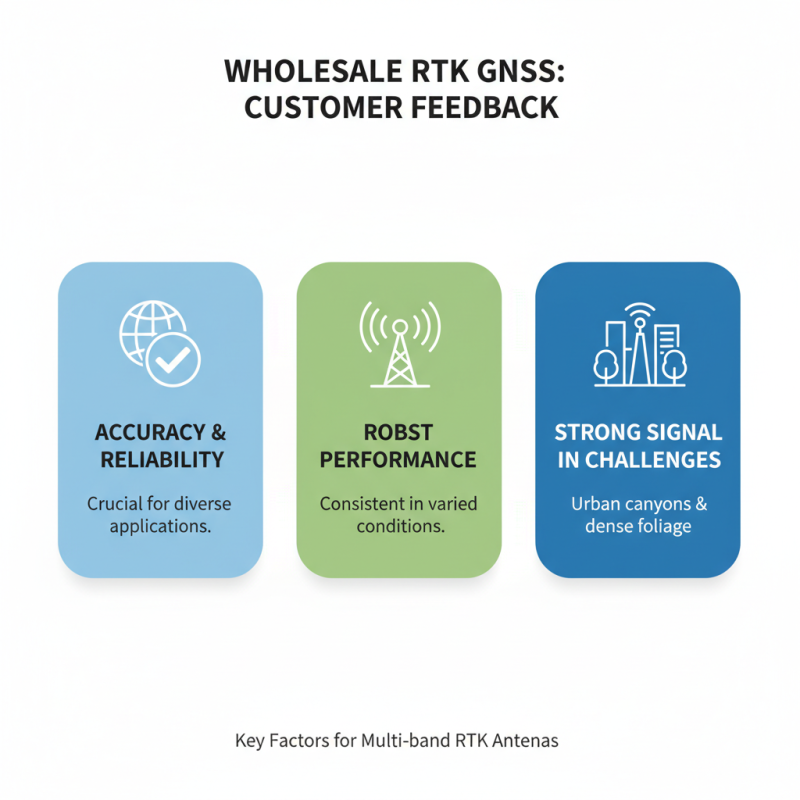
When choosing wholesale multi-band RTK GNSS antennas, customer feedback is invaluable. Many users emphasize the importance of accuracy and reliability in their applications. Positive reviews often highlight antennas that provide robust performance in diverse conditions. Users appreciate models that maintain a strong signal in challenging environments, such as urban canyons or areas with dense foliage.
However, some customers have pointed out challenges as well. A common concern includes setup complexity. A few users found certain models difficult to configure, leading to frustration. Others reported variability in performance levels, depending on the hardware and environmental factors. These reflections show potential buyers the importance of researching options thoroughly before making a selection.
Customers frequently engage in discussions about their experiences in online forums. Insights from these communities help future users make informed decisions. By examining feedback and performance, individuals can identify reliable antennas that meet their specific needs. Understanding the user experience can lead to a more satisfying purchase and better results in the field.
FAQS
: Evaluate the antenna's frequency range and terrain compatibility for better satellite coverage and accuracy.
Complex landscapes can disrupt signal reception, requiring a more durable and resilient antenna design.
Superior tracking maintains accuracy in challenging conditions, ensuring reliable data performance.
It helps filter out inaccuracies caused by signals bouncing off buildings, improving reliability.
Some models function for over 12 hours, but others may struggle. Evaluate expected usage patterns.
Prices range from $200 to $1,500, affecting features like accuracy and durability, which matter greatly.
Limited stock can delay projects. Ensure suppliers maintain consistent inventory for smooth procurement.
Not all suppliers offer good support. Lack of service can be risky if issues arise post-purchase.
Cheaper models often lack functionality. It's essential to balance budget with performance needs carefully.
Yes, conditions like rain or fog can degrade signal quality, reminding users that no system is foolproof.
Conclusion
In the realm of precision positioning, selecting the right Multi Band RTK GNSS Antenna is crucial for achieving optimal accuracy and reliability. A thorough overview highlights the importance of these antennas, as well as the criteria necessary for evaluating their efficiency, such as frequency support, durability, and compatibility with various systems.
The article presents a compiled list of the top five wholesale Multi Band RTK GNSS Antenna options, emphasizing their distinct features and performance metrics. Additionally, it discusses the price range and availability of these antennas, providing valuable insights from customer reviews and feedback. This comprehensive guide serves as a resource for those seeking to enhance their precision positioning capabilities with the most suitable Multi Band RTK GNSS Antenna.